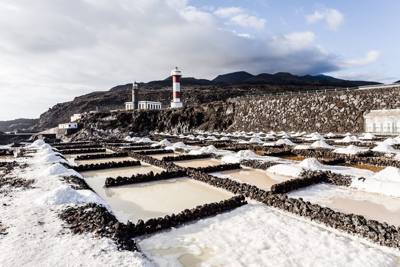
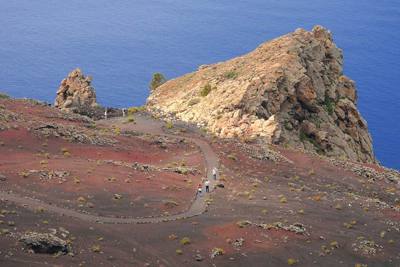
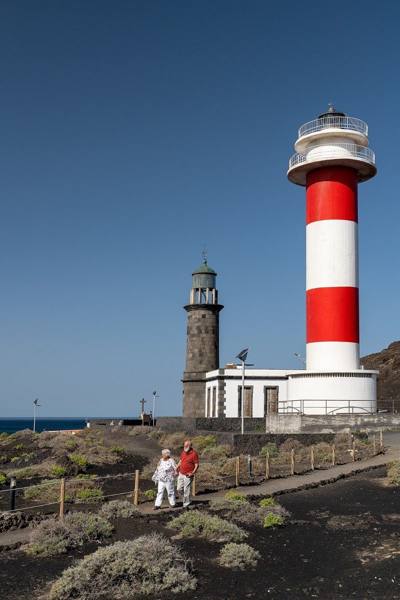
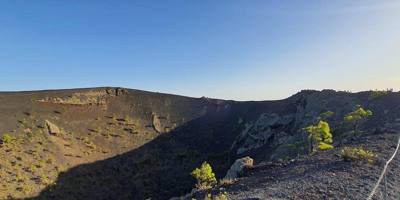
After the bewilderment and fear, the nearest areas were evacuated, with a certain sense of relief for the islanders: the incandescent ashes advance towards the sea, sweeping across uninhabited land in their path. A new volcano has been born. Christened Teneguía, the name of a rock near the site of the eruption, it will cause hardly any material damage beyond some vineyards and a small stretch of the coastline.
The eruption goes on for 23 long days, during which several vents open, the cracks and the expulsion of ash increase, amid earthquakes felt all over the island. The young geological structure becomes a magnet for visitors far beyond the Canary Islands.
During that period of eruption, the Isla Bonita fills up with journalists, onlookers, geology lovers and tourists in general who want to see at first hand the trace left by what is today the last surface eruption in Spain.
The birth of the Teneguía, besides transforming the island's landscape — it is estimated that the volcanic material made the surface of La Palma grow by about two million square metres — changed its economic structure. Until 1971 the island had very little tourist infrastructure, and it boomed in the years that followed.
A privileged natural enclave
Half a century later, the Teneguía is still one of the most visited natural sites on an island that treasures corners of great geological beauty and richness. A land of great contrasts, with a green, rugged north and a south of spectacular lunar landscapes of lava. It is one of the most singular experiences one should live.
You will find more information at the San Antonio Volcano Visitor Center.