A deep-rooted winemaking tradition — discover Malvasía and our wineries
A Land of Wines among Volcanoes
For many generations, winegrowing has been part of the land of Fuencaliente, producing wines renowned all over the world.
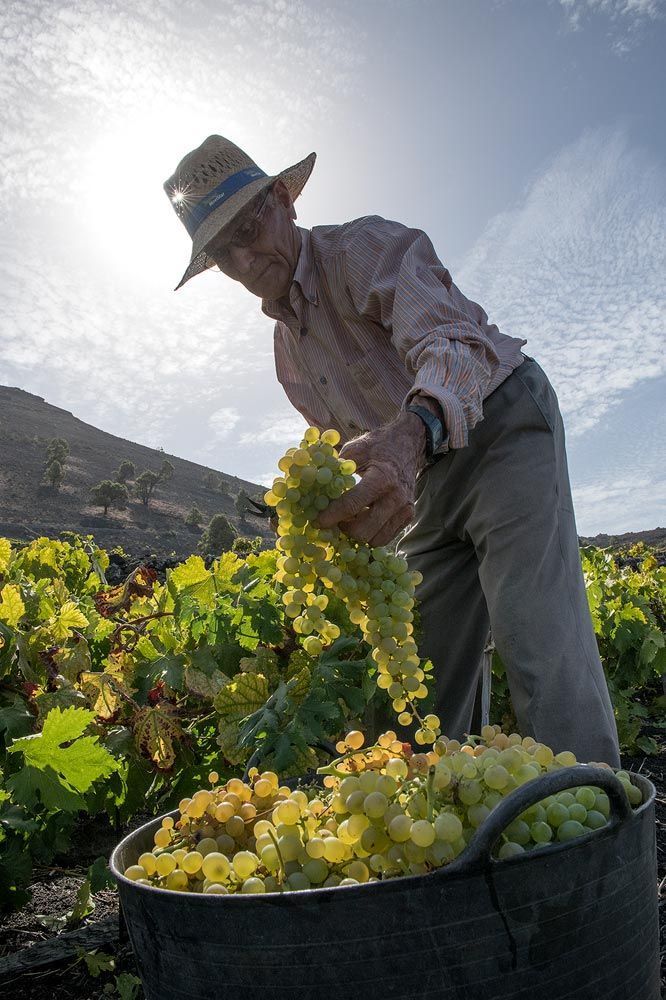
Fuencaliente is the heart of wine, of the value of perseverance and of the care of the vineyards. Going back to the origin, the Malvasía variety curiously comes from the island of Crete, spreading to parts of the Mediterranean and being introduced in Madeira before reaching the island of La Palma, where it rests today in the area known as "Llanos Negros". Here 80% of this grape on the island is grown, on steep slopes of "picón" (volcanic gravel) of exceptional beauty.
It was at the end of the 15th century, with the arrival of the first European settlers, that the fields of La Palma received their first vines. And among them came specimens of the most ancient Malvasía. Barely two hundred years later, the exceptional quality of our wines had crossed borders and was celebrated both in the European courts and in the Americas. One example were the sailing ships that reached Havana and, on their way back, called at Port Everglades in Florida — which suggests that, after the signing of the United States Declaration of Independence, the toast was made with Malvasía wine from Fuencaliente. These transatlantic routes also passed by the island and helped our wines earn the praise of Shakespeare, which reveals how popular they were in England. Later, in the 19th century, the Romantic poet Lord Byron would also refer to our wines as one of the nectars preferred by the gods.
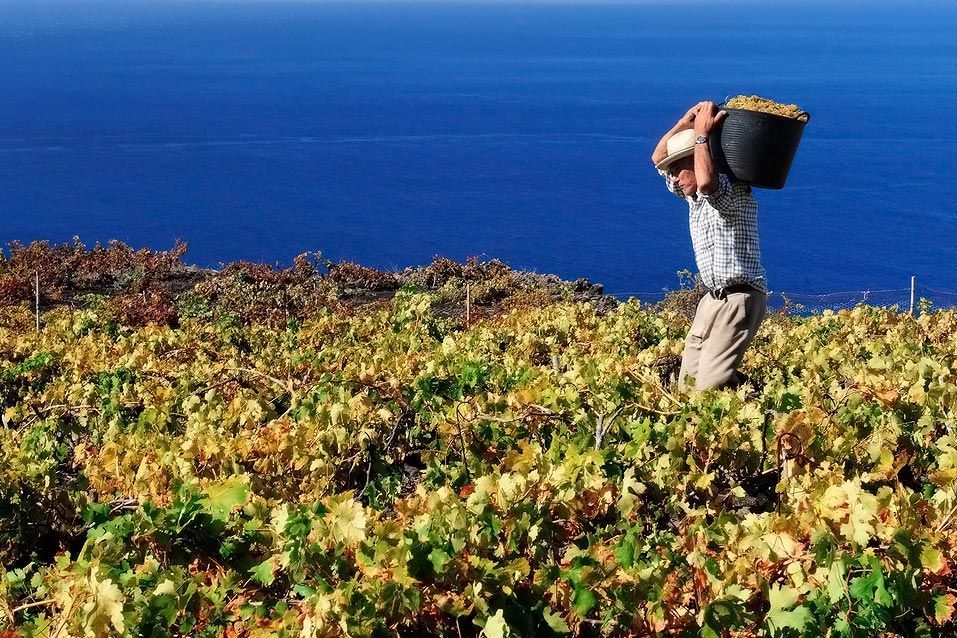
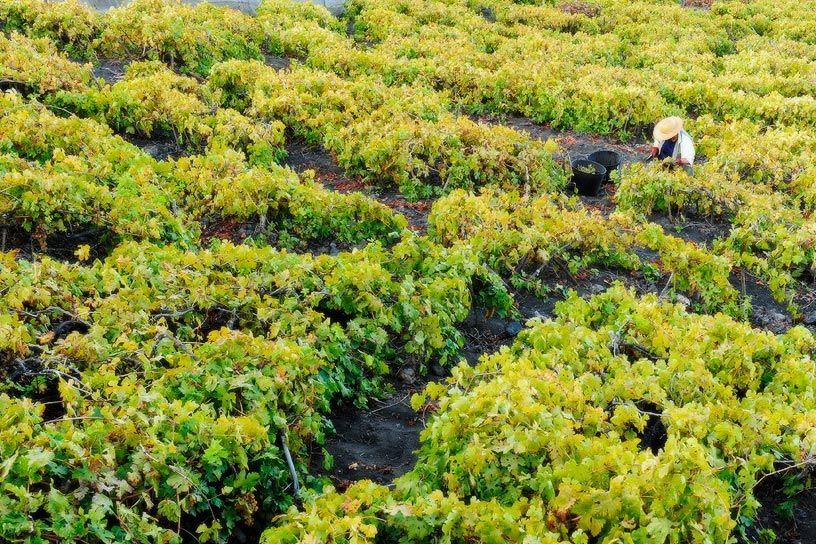
Our ancestors knew how hard it would be to farm in areas where volcanic eruptions were a risk, and yet they never stopped growing it. After the eruption of the San Antonio volcano in 1677, the land changed and the work continued to make way for this prestigious variety. Also of great importance is the growing of this and other varieties in the winegrowing area of Las Machuqueras, an arid land with the singularity of being the youngest soil in Spain, born of the eruption of Teneguía in 1971.
It is not only the land or the grape that makes this singular wine unique, but the way it is made. The whole harvest is picked by hand on narrow, steep slopes; then, with the art of treading the grapes, the traditional wine presses of the small local wineries are put to use. And to finish this delicacy, the winegrower, with great patience and care, ferments the wines slowly and without any additives.
«El que a Fuencaliente vino, y no bebió vino, a nada vino.» — "He who came to Fuencaliente and drank no wine, came for nothing."
Wineries
Discover the local winemakers
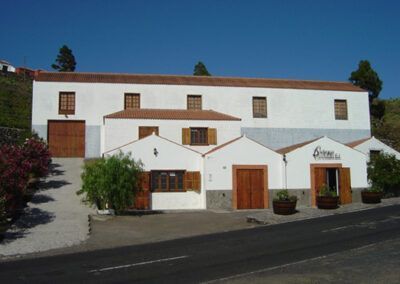
Bodegas Carballo
Officially founded in 1989, Bodegas Carballo SL is the result of a long and broad family tradition in the world of wine which, like the long-lived vineyard of Los Llanos Negros, goes back to the end of the 19th century.
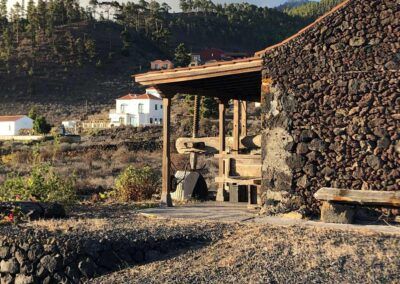
Bodega La Casa del Volcán
It makes, by hand and with minimal intervention, a dry white wine from the grape variety known in Fuencaliente as “Bujariego”, grown in the surroundings of the winery at between 500 and 650 metres of altitude, and sold at its own shop.
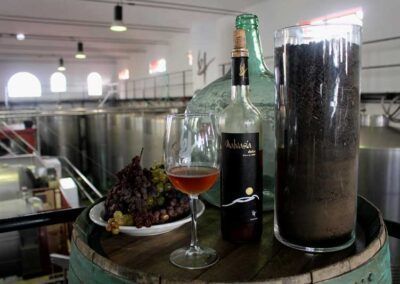
Bodegas Teneguía
Founded in 1947, this winery gathers the knowledge and tradition of centuries of effort and adaptation to the harsh conditions of the south of the island of La Palma. For more than 70 years our cooperative has been one of the references of the wine world in the Canary Islands.
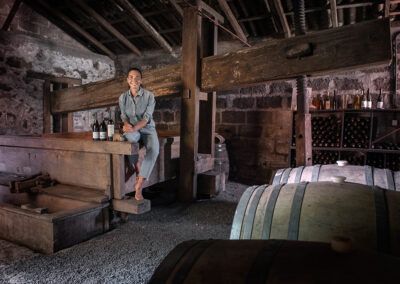
Bodega Victoria Torres
Since 1975, this small family winery has been the story of several generations of winegrowers and winemakers of the same family, up to the fourth and fifth, who work side by side today.
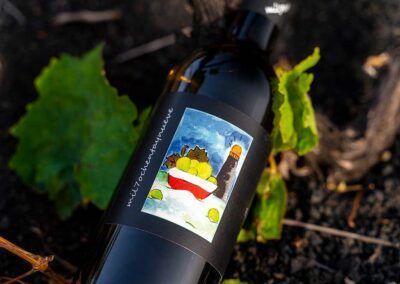
Mil7ochentaynueve
mil7ochentaynueve is a small winery located in the municipality of Fuencaliente, on the island of La Palma, devoted to growing Canary Island grape varieties and to making wine. The project, started in 2008 and under the La Palma Designation of Origin since 2012, was born of love for the land and for the island's winemaking culture.
More videos
To print (offline) and listen
This page is also available as a printable document and as audio.