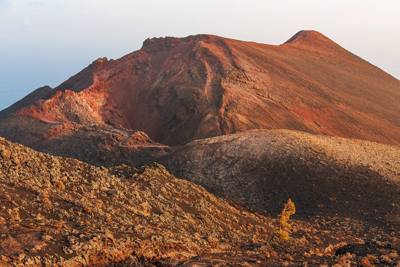
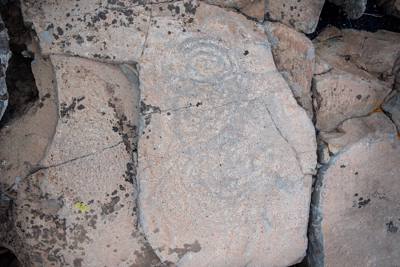
Archaeologists, ever since Luis Diego Cuscoy, have read water symbols in those spirals: at the foot of the rock a seasonal hot spring wells up, to which the sick used to come, and in the area there are cremation burials and spaces for ritual sacrifice. Cuscoy prevented the rock from being blown up, and when in October 1971 the volcano opened beside it, the eruption took its name, Teneguía, and covered part of the excavated area without damaging the engravings. It has been a Site of Cultural Interest in the category of archaeological zone since 18 July 1996.
In its crevices grows the cabezuela (Centaurea junoniana), an endangered La Palma endemic that lives in the wild only here. It lies within the Teneguía Volcanoes Natural Monument; in 2023 the Cabildo installed signage in several languages and a viewpoint at Las Machuqueras from which to contemplate it. It can be seen from the GR 131 and from Route 4 on the way to the lighthouse. The engravings must not be touched or stepped on, and you must keep to the trails. See also: Volcán Teneguía.