Fiesta de la Vendimia
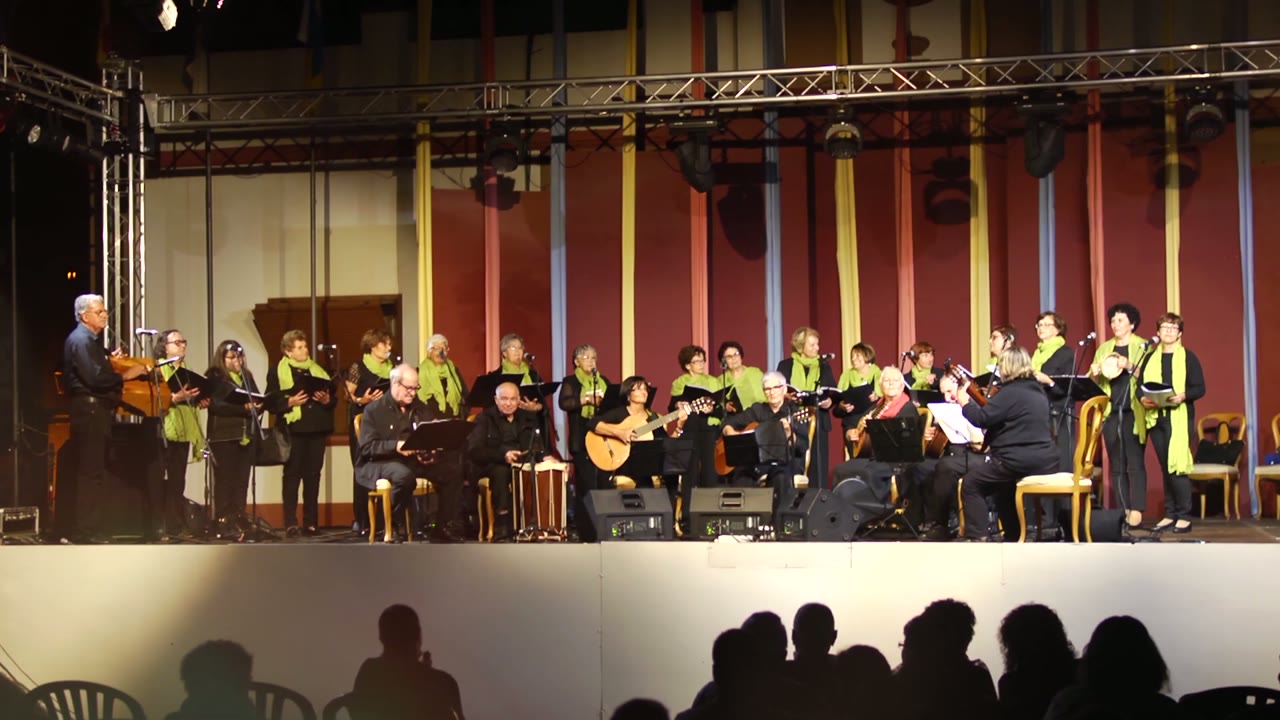
The Fiesta de la Vendimia (Grape Harvest Festival) is popular and much loved by everyone in Fuencaliente. It has been celebrated since the 19th century, and at first the events took place in the neighbourhood of Los Quemados. It was not until 1948 that it moved for good to its current home: the neighbourhood of Los Canarios. The Fiesta de la Vendimia is full of cultural and sporting events, such as the performance of the theatre association "Las Viejas Solteronas", whose popular comedy — a group of friends acting out their story with song as the common thread, women lamenting with great mischief having been left single at home — delights locals and visitors alike. Also outstanding are the versadores, poets able to improvise and sing décimas (ten-line stanzas) to musical accompaniment, capturing the attention of all who listen.
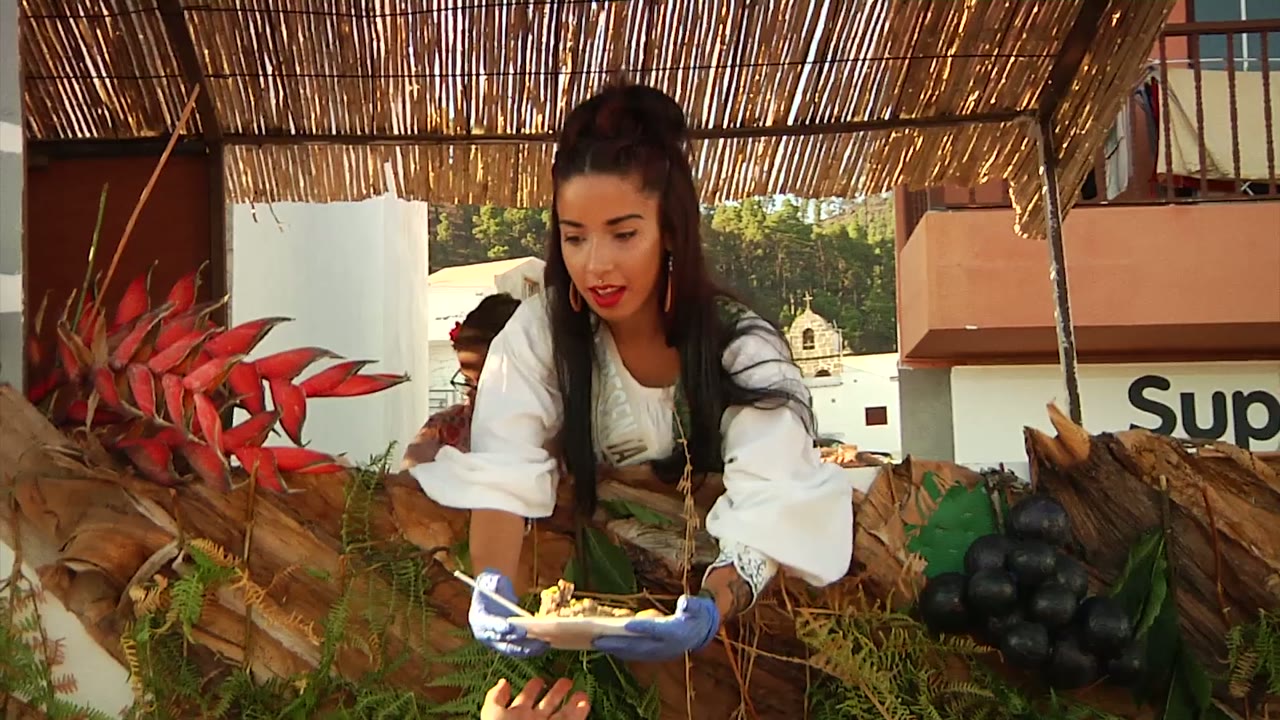
On the day of the romería (festive pilgrimage), a parade of floats from each of the municipality's neighbourhoods takes place, with popular folklore resounding at the hands of A.F. Echentive and invited groups. The floats, prepared months in advance, are decorated with objects related to the grape harvest and recreate scenes of the work of picking grapes. Typical local products are handed out and, of course, wine — with the La Palma Designation of Origin — from the municipality's most representative wineries.
And as the grand finale, the traditional dance of the Caballos Fuscos (the "dusky horses"), made from a frame of wood and wattle covered with cloth and tissue paper of many colours, parading through the streets to the village square, where the crowd awaits them to the rhythm of the polka played by the municipal music band. A great many tourists come to Fuencaliente to enjoy this festival — and there is nothing better than a taste of the local wines and cuisine to draw people in.
Fiesta del Pino de La Virgen
In the middle of the open pine forest, fragrant with resin, 5 km from Los Canarios and reached by a dirt track, the legendary Pino de La Virgen rises proudly. Its tar-rich heart oozes the sap that gives it life, and it jealously guards the Virgin. Its branches, like arms, protect the small image honoured with a romería by the faithful. It was once the festival of the caleteros — the name given to the people of a small, charming neighbourhood of the municipality — but today it is a popular festival for everyone in Fuencaliente. They say that when this traditional festival became popular, people gathered from all over the municipality, and from other villages on the island too — such as the inhabitants of nearby Montes de Luna, a neighbourhood that was always closely tied to this festival, sharing other events in one neighbourhood or the other as well, such as dances, gallofas (communal gatherings) and more.
Nowadays, locals attend this traditional festival where music takes centre stage and those present enjoy a day full of traditional activities such as sack races, barrel-stave contests and a friendly display of lucha canaria (Canarian wrestling) between single and married men — not forgetting the Eucharist and the traditional communal lunch. This traditional festival is held every second Sunday of August.
Fiestas del Pino de Santo Domingo
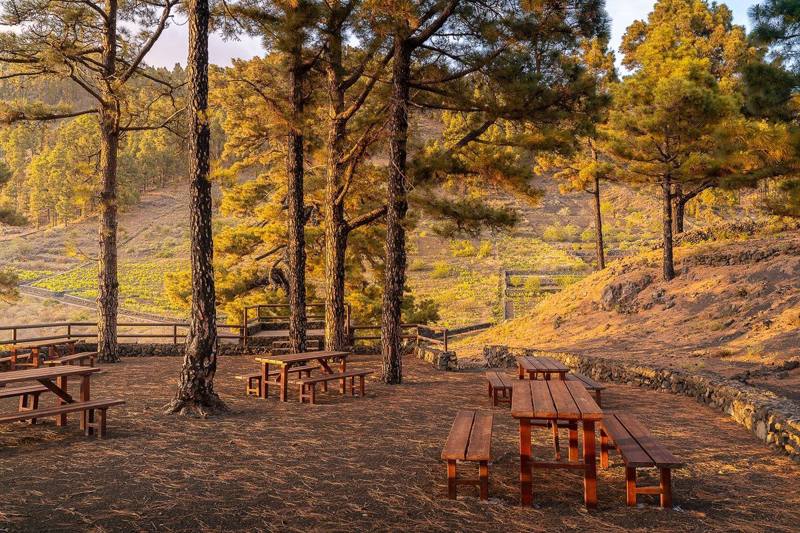
It takes place in July, when the weather is at its best and the locals meet up again with friends and family beneath a beautiful Canary pine of singular shape and great size, with a trunk 5.20 metres in circumference, a height of 21 metres and boughs that almost brush the ground. It is a strategic spot, at the crossroads of the paths that were used to link the two sides of the island. Amid the calm and the breeze, at an altitude of 785 metres, it gave shelter to travellers; oral tradition has it that it was planted by a priest from San Miguel de Tazacorte who used to go and celebrate mass at the hermitage of Las Nieves in Santa Cruz de La Palma, and who carried water on his mount to water it both on the way out and on the way back. Its name comes from Santo Domingo de la Calzada, builder of the Way of St James that passes through that beautiful place in the region of La Rioja. It is believed the name was given by the priest who "fathered" it, a good connoisseur of the Saint's story. Since 2011, when the site was restored and a recreational area was created there, the people of Fuencaliente celebrate every 21 July with a communal meal in the shade of the pine, listening to the improvised art of the versadores' singing, just as our ancestors used to do — they well remember walking to the spot, each family bringing its own food, gathering to talk while the children joined in every traditional game; a joyful family festival. It is, without doubt, an opportunity to get to know the traditions of the Canarian people.
Fiestas de la Virgen del Carmen
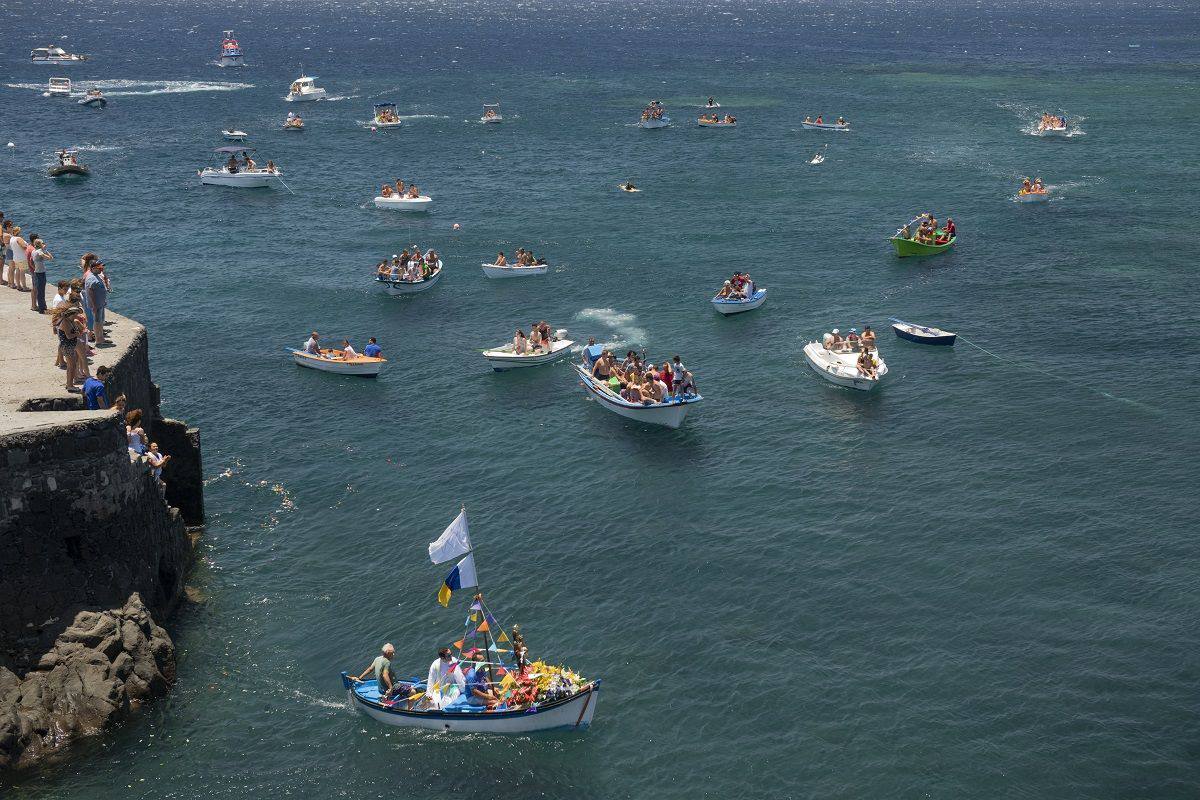
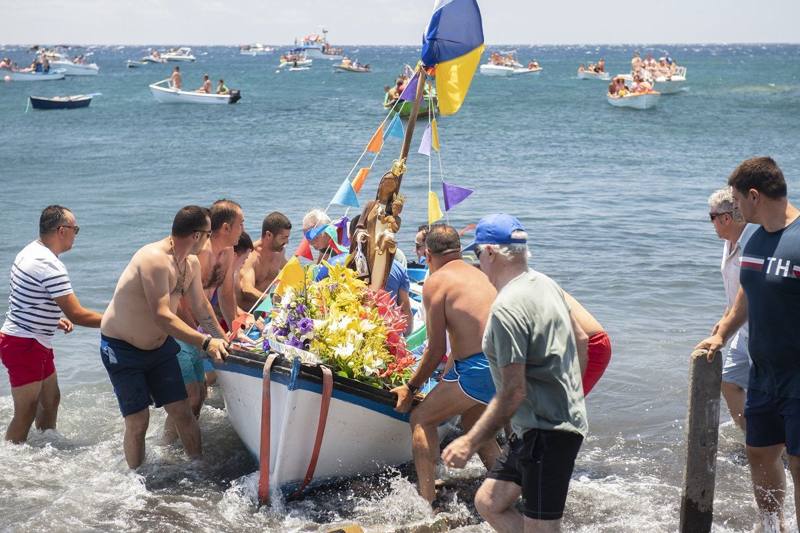
Patron saint of seafarers, her feast is celebrated on 16 July and is one of the main festivals of the municipality of Fuencaliente. Hundreds of people faithfully gather at Playa de Puntalarga, first for the Eucharist and then to watch the Virgin set out, her float carried by the women and devotees of the image to one of the boats, which sails in a maritime procession to Playa del Faro, where local residents dedicate poems to her — a very moving moment. The day before the procession, the neighbourhood association of El Faro prepares a communal lunch to open the festival, with an open-air dance beneath the awnings of the small boats; and Sunday, the day the Virgin is taken aboard, becomes a mass gathering, a day in which everyone who comes down to the beaches enjoys themselves and is drawn into the celebration. After her voyage she returns to her sacred place, and the neighbourhood association of Puntalarga puts on a communal lunch open to all comers. Fireworks and the cry of ¡Viva la Virgen del Carmen! help round off the festive atmosphere.
Fiestas de San Antonio Abad
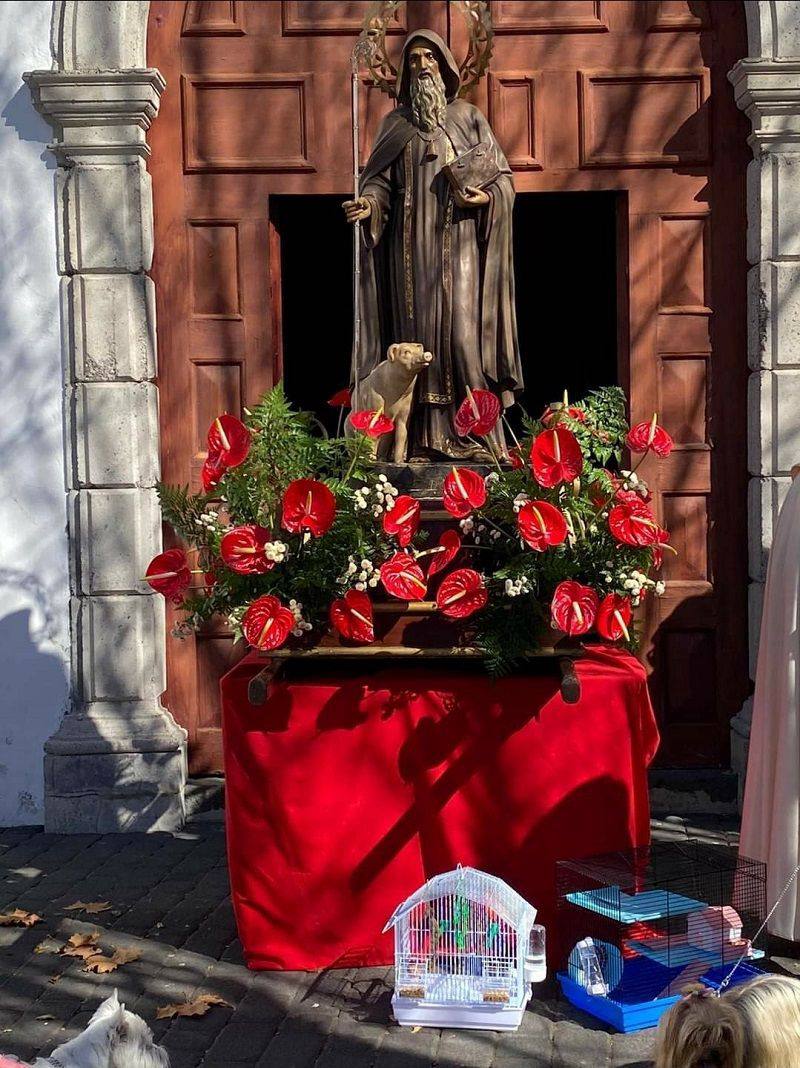
Across the Canary Islands, images of Saint Anthony the Abbot, protector of animals, are found in countless hermitages and churches. Yet the municipality of Fuencaliente is the only one on the island of La Palma where this Saint is the patron of the municipality.
Every 17 January the parish priest performs the traditional blessing of the animals in the church square. When evening comes, after a solemn religious service, the image of Saint Anthony the Abbot is carried in procession on the shoulders of the people of Fuencaliente, accompanied by the municipal music band, through the streets of the village. Besides the carving on the altar of the Church of San Antonio Abad, there is another of equal size in the chapel of the municipal cemetery.
Fiestas de Las Cruces
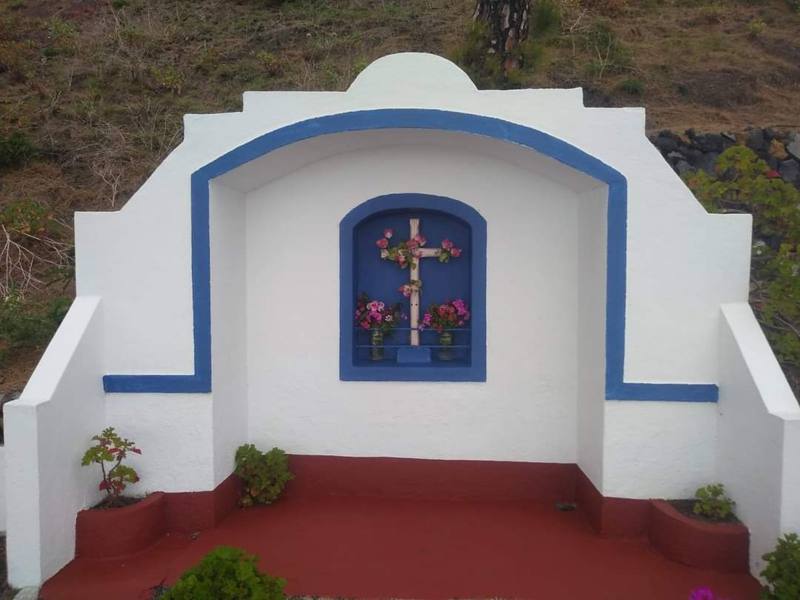
Every 3 May is a special day on La Palma. Besides marking more than 500 years since the conquest of the island and the founding of Santa Cruz de La Palma, tradition dictates that the crosses in every square, at every crossroads, in chapels and even in private homes receive the homage of those who decorate and garland them for the occasion, and of the thousands of people who go from cross to cross to admire them.
From the eve of the feast, the residents of each area work hard to decorate the crosses with the most varied ornaments, from flowers to luxurious jewellery, showing off their originality and good taste. In Fuencaliente, in recent years it has been the local residents themselves who have revived this tradition, adorning some of the 21 crosses in the municipality. It is the locals who clean and decorate them with care, and at some of them groups of friends gather with their instruments to liven up the festivities, with room for the spontaneity of anyone who joins in.
Fiestas de La Virgen del Cobre
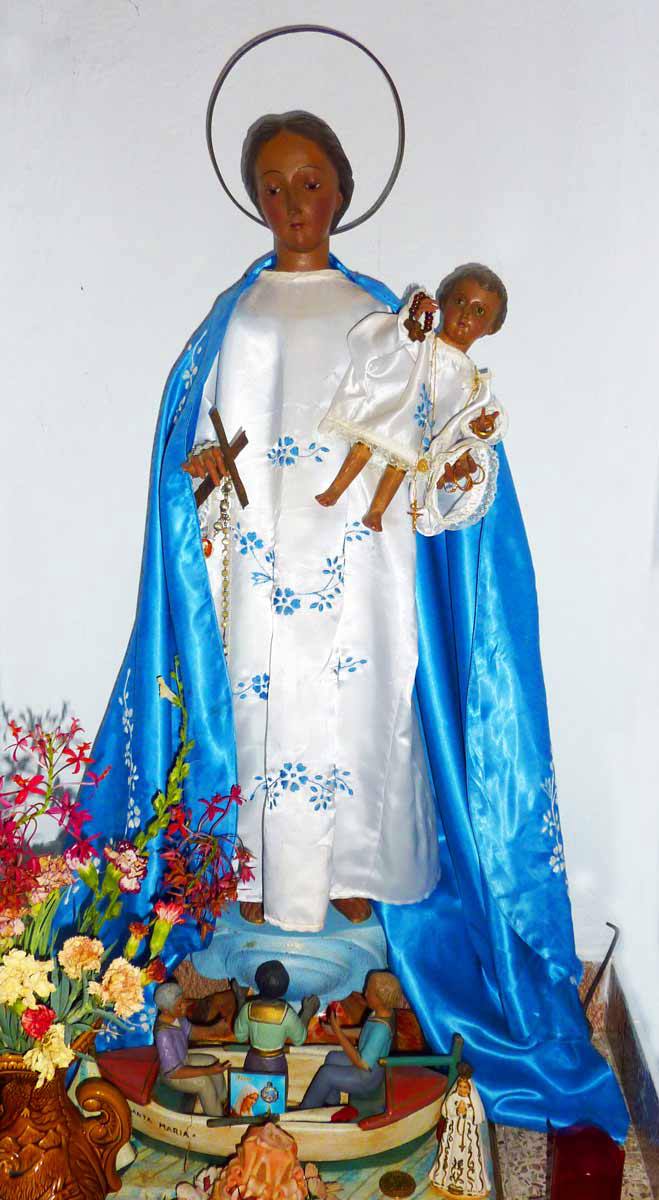
The Virgen del Cobre is kept in the National Shrine Basilica of Our Lady of Charity of El Cobre in Santiago de Cuba, and was declared patron saint of Cuba in 1916. Legend has it that three fishermen went to fetch salt from the Bay of Nipe when a storm broke that put the small boat and its three crew at risk. After they prayed for protection, the storm vanished and they discovered an image floating on the water. It was the Virgen del Cobre.
In the 19th century, at a time of mass emigration from the Canary Islands to Cuba in search of a better future, a local man who travelled to that Caribbean island brought back the image to venerate and keep it in his home in the neighbourhood of Los Quemados. It has remained in the same house ever since, cared for and preserved by Dña. Antonia Cabrera Hernández (Delfina) to this day.
Oral tradition tells that from the late 19th and early 20th century until the end of the 1950s, the neighbourhood celebrated festivities in honour of Our Lady of Charity of El Cobre. Many villagers who lived through those years remember this beloved festival with special affection and joy.
The festivities, normally held in July, lasted three days over a weekend. The start of the fiesta was announced by a "shower of rockets" that broke the calm and silence of a neighbourhood eagerly awaiting the start of its long-awaited celebrations. There were many events, both playful and religious: sack races, races of caballos fuscos, dances and verbenas in the square of Los Quemados (Plaza de la Amistad), street parades; there was also an allegorical float representing Spain and some of its territories, on which women from the neighbourhood, dressed in the typical costume of each region, made the corresponding offerings. Theatre had its place in the festivities too, with performances of comedies (Coba Fina, Amor Campestre, El Cariño de un Indiano…) whose cast was always drawn from the neighbourhood.
The image of Our Lady of Charity of El Cobre was carried from the home of Antonia Cabrera Hernández to the neighbourhood school, where it stood on an altar decorated with great care by the residents. There it remained beside the image of the Christ Child while the Novena of Thanksgiving to the Virgin was celebrated, along with various motets and litanies. From there, on a Sunday — the main day of the festival — both images were carried to the neighbourhood square, where the Loa (hymn of praise) was sung.
One of the main events, the one everyone most looked forward to and which is still remembered with special affection, took place during a break in the verbena on the festival's main day: the apparition of the Virgen del Cobre to the three fishermen in the middle of a storm was staged, and a dialogue between the Virgin and the three fishermen was performed. These characters were played by a girl and three boys from the neighbourhood. The Caballos Fuscos also made their appearance, parading with fireworks along the neighbourhood road to the square, where they danced to their music. The festival ended on the third day with the election, in the Plaza de la Amistad, of a new president and steward, in charge of organising the following year's festival, and a dance in honour of the newly elected president.