History of the winery
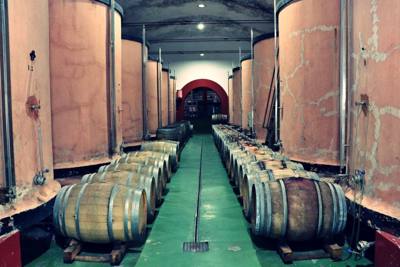
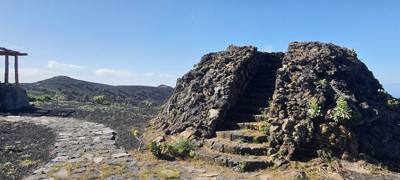
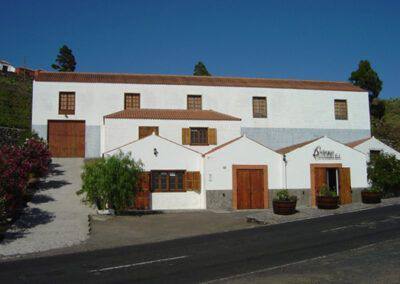
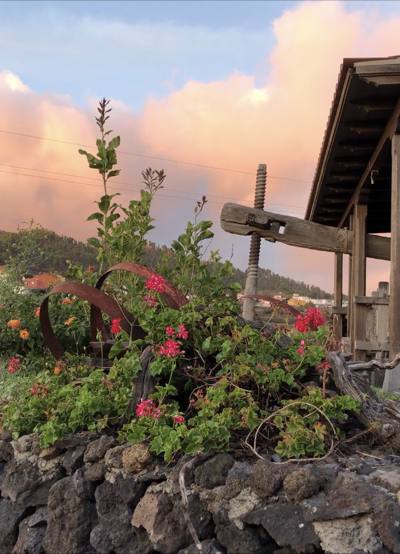
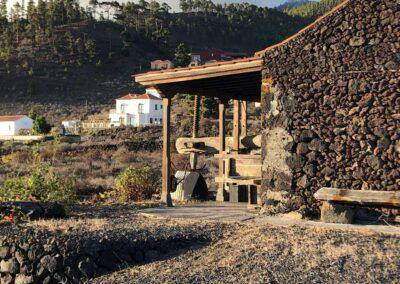
The estate comprises six buildings of various kinds, from a laboratory where must and wine samples are analysed to the site of a traditional 19th-century tea-wood wine press (Canary pine heartwood) which, beyond serving as an exhibit, is used for the vinification of the sweet Malvasía, the company's flagship wine. Also remarkable is a volcanic tube that helps to cool naturally the building where the wines ferment and are stored. All of them are fitted with the facilities needed to guarantee the proper working of the production chain that makes it possible to craft the product in an artisanal way.
The land and the vineyard
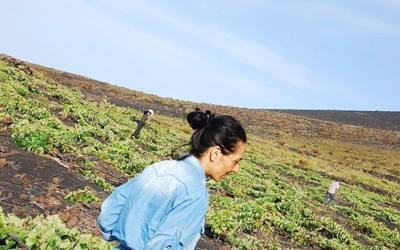
In 1677, in Fuencaliente (southern La Palma), the San Antonio volcano erupted, covering the fertile land around it with ash and leaving a layer of lapilli roughly two metres deep. Twenty-three years later, the farmers of this area decided to plant vines, and so had to dig trenches to reach the layer of fertile soil lying beneath the picón (volcanic gravel) and place the rooting canes there, covering them afterwards with the picón they had dug out. This singular technique gave rise to a type of ash-mulched cultivation with which the grapevines can withstand the harshest weather conditions.
The vines belong to the European Vitis vinifera, a species that was invaded and destroyed all over Europe by the phylloxera plague in the second half of the 19th century — a plague the Canary Islands were spared. The Gual, Verdello, Sabro and Bastardo varieties make up the group locally known as Vidueños, complemented by Negramol and Bujariego. The undisputed queen, however, is none other than the Malvasía Aromática, source of one of the most prestigious wines in the world. The vines are grown under conditions that could be called “organic”: natural organic manure is used as fertiliser, and only copper and sulphur salts as fungicide (insects cause no significant damage, so no insecticides are used). The grapes they yield are destined for high-quality wines, different and unique.
Winemaking and the wines
The catalogue consists of just five wines: two whites, two reds and one rosé.
Among the whites there is a dry one and a sweet one. The first, in its 2018 vintage, is made from Bujariego and Listán Blanco (50% each) and is destemmed, crushed, drained and gently pressed. Fresh and gentle on the palate, it has good, well-integrated acidity and a pleasant fruity taste with the slight bitterness characteristic of the variety. The second, on the other hand, comes 100% from the Malvasía Aromática and benefits from grapes that are picked very ripe (with a sugar content of at least 34% Brix) and are trodden in a tea-wood wine press in the traditional way. With around 80-100 g/l of residual sugar, it has great aromatic intensity (raisins, honey, roses…) and good balance on the palate.
As for the reds, there is a traditional one and a barrel-aged one. Both, in their 2018 vintage, contain 50% Negramol, 40% Listán Negro and 10% Gual and Sabro (plus Malvasía Aromática in the first case). The main difference comes from the six months of ageing in French oak barrels, which lends it roasted notes (wood, toast, coffee…) and greater complexity on the palate.
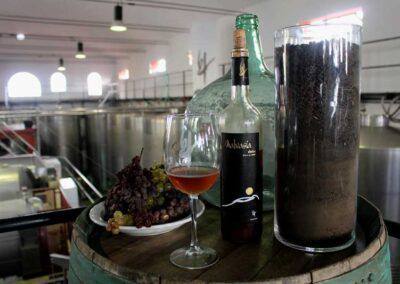
Finally, the rosé is made from a Listán negro variety from El Tión: the grapes are destemmed and crushed, then macerated and drawn off the following day. The result is a very fresh, fruity wine (strawberry/raspberry) with good balance on the palate.
Contact information
Address: Carretera a las Indias, 74. 38740 Fuencaliente de La Palma. Canary Islands – Spain
Opening hours: Tuesday to Saturday: 11:00-19:00. Guided tours: by prior booking
Phone: 630 971 693
Website: bodegascarballo.com