At first, like most constructions of this type in the Canary Islands, they were built as huts of rubble masonry, wood and straw which, over the course of the 18th and 19th centuries, were extended from the main door to the choir.
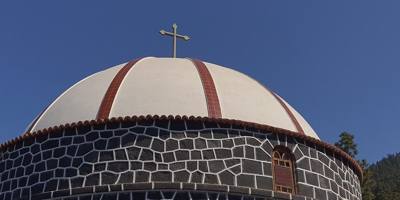
Today, its single-nave construction with a whitewashed hemp ceiling has a slender stone belfry over the annexes of the temple, which was completed in 1866. Domingo Crespo was the one who built the beautiful stone arches at the main doors of the building, typical of most Canarian hermitages and churches. Its bell tower, made by Estanislao Duque, dates from 1866. The presbytery is rectangular and measures 10 m long by 6.65 m wide, and the frescoes on its ceiling were painted by Ubaldo Bordanova Moreno in 1904, the same painter who made the frescoes in the two main vaults of the Church of El Salvador in Santa Cruz de La Palma.
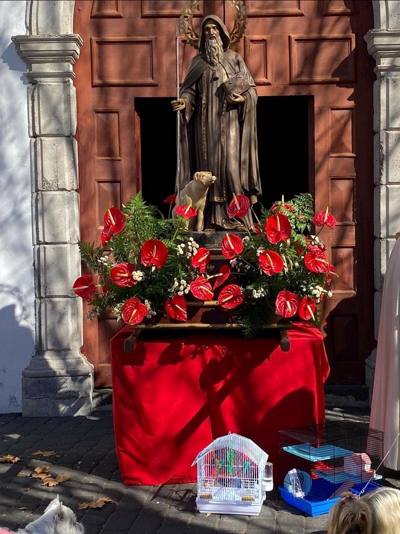
The church preserves some interesting carvings such as the Cristo del Entierro, the Calvary group, the Virgen del Carmen and two images of San Antonio Abad.
For its architectural and heritage wealth, this church was declared a Site of Cultural Interest with the category of monument on 18 April 1996.