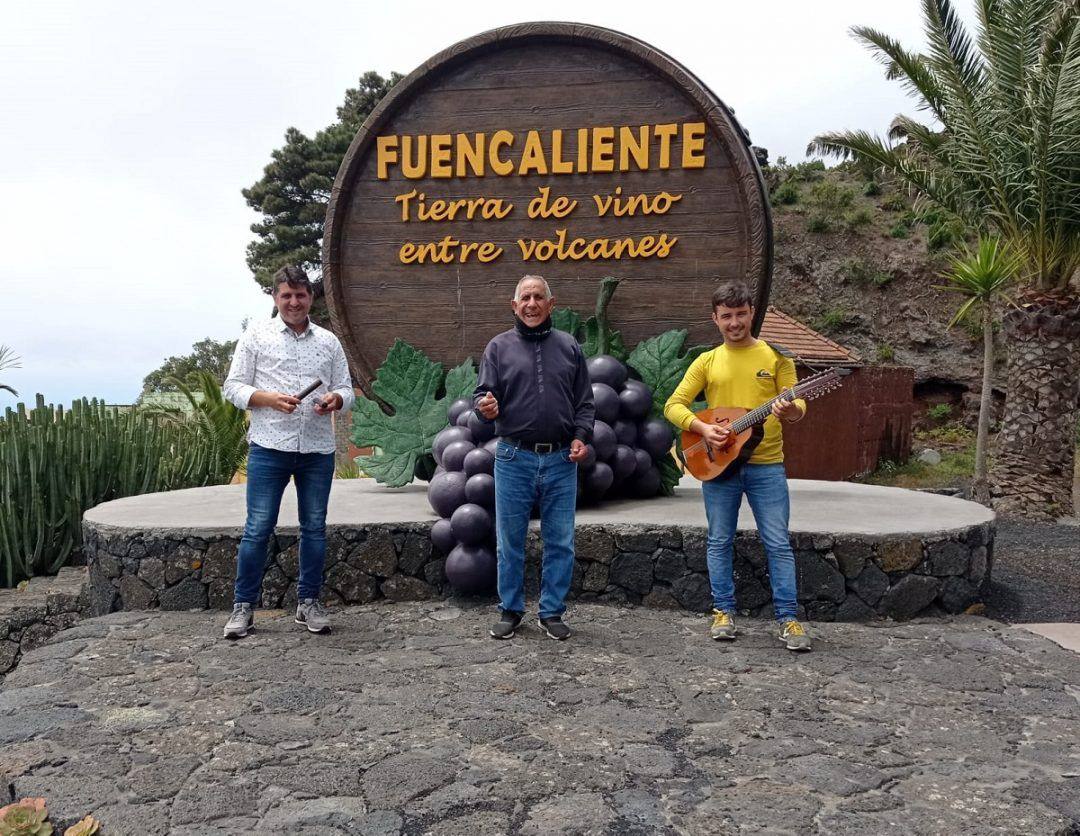
FUENCALIENTE AND THE DÉCIMAS: A RECIPROCATED LOVE
Yapci Bienes
Fuencaliente has a strong tradition in the field of the popular décima (a ten-line stanza). This tradition is not limited to the local appreciation of its expressions, which is considerable, but also involves an interesting local practice. The décima has gathered the feelings and sayings of the people, their living memory, from the essential to the anecdotal. Here the stanza has fulfilled, and still fulfils, many relevant functions, so that, from the cultural and identity perspective, it must be regarded as an outstanding element. In our context, the décima becomes a rhymed and metrical version of local history. The sung décima has enlivened the caldero (the fish stew shared on the beach) and the winery parranda, just as it has eased the rigours of farming and fishing work, or seasoned the gallofas (communal work parties). Today it still finds, both in private celebrations and in community festivals, a space of its own, a fitting setting in this south of volcanoes and vineyards.
If we sketch a municipal overview, in the field of the written décima there are precedents among several poets born in the 19th century: María Rodríguez Carballo, “La Melra”, Nicolás Gómez Lorenzo, “El Mocho”, or Clemente Méndez Romero, “El Tuerto”. From that period, it is Nicolás “El Mocho” of whom the most décimas are preserved, thanks to the fact that he printed many of them on chapbook broadsheets. Considering the continuity of the tradition, later poets stand out in this creative field, such as Nicolás Gómez Hernández or Eudocio. To the latter, oral tradition attributes a very famous décima that reflects the healthy historical rivalry we keep with our sister town, Villa de Mazo:
«Mazo is a brave village,
friendly, welcoming,
of herders and farmers,
very prosperous and flourishing.
But Fuencaliente is more so,
with its sprawling vine trellises.
These are clear signs
of what destiny wanted:
to give Fuencaliente the wine
and Mazo the animals.»
If we focus on the field of the versadores — whose art consists of improvising décimas, typically sung and accompanied by the punto (the traditional string ensemble) — the municipality is the cradle of figures such as Eladio Martín Bienes, “Lalo”, and Gabriel Yanes, better known as “Luis el Casayanero”. The former is fondly remembered for his humorous spark, a true showcase of Canarian wit and mischief. Part of his improvised output is collected in sound recordings promoted by his own son. He was also included in the sound anthology of versadores published by the Centro de la Cultura Popular Canaria. Lalo Martín's participation in any popular celebration was taken as an event, as everyone knew he would liven up the party with his tremendous and effective witticisms, such as:
«Forgive me for how little it is,
but I am going to leave:
for singing I have
less brains than a mosquito […]»
Lalo sang mainly at private celebrations, although he also toured many stages, drawing from them roars of laughter and thunderous applause, which amount to public recognition of this human emblem of our culture. With every justice, he was honoured by having a street in his native neighbourhood, Las Indias, named after him. As for Luis “el Casayanero”, he did not perform much in public settings, but mainly at friendly gatherings and/or those tied to farm work. Even so, he is remembered with admiration, both for the finesse of his compositions and for his melodious tune, of which no original sound recordings have been found. Many, however, still recall how he savoured the words as he launched the formula with which he used to announce himself before starting to improvise:
«In the winery I await you,
give a shout when you arrive,
let it be heard from the home
of Luis el Casayanero […]»
Continuing the family saga of Luis “El Casayanero” are Joseíto Bienes and Yapci Bienes, his nephew and grand-nephew respectively. Driving forces behind the group Punto y Clave, they have improvised verse at numerous festivals and cultural venues, and have spread this tradition in schools and in the media. Together they have released two CDs. Yapci has also recorded two further albums with Cuban repentistas (improvising poets): the first with Adolfo Alfonso and the second with Yordán Quintero, “Yayito”. He is likewise a regular member of the Canarian delegations at international festivals of poetic improvisation, taking part in many of those held in Spain and in several abroad, visiting Cuba, Mexico, Argentina, Portugal and Italy.
Apart from the versadores mentioned so far, who are the best known in Fuencaliente, among the villagers there are and have been several décima poets with a gift for improvisation, among whom we would single out: Gabriel Hernández, Miguel Martín, Luis Manuel Hernández Bienes and Victoria Díaz Bienes.
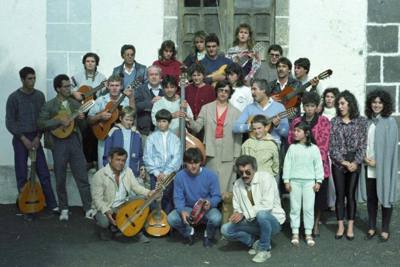
When speaking of décimas and versadores, a reference to their musical setting is unavoidable, a field in which the municipality deserves a special mention. In fact, it has produced several outstanding performers of the punto that accompanies verse improvisation: Aquilino Torres (accordion), Pedro Pérez (guitar), Luciano Díaz (guitar) and Rubén Medina (lute). To them we must add two other musicians who, though not Fuencaliente-born, are so by life and adoption: Irineo Acosta (lute) and José Álvaro Martín, “Chanito” (lute). In the field of setting to music and singing memorised décimas, the figure of Carmen Rodríguez Carballo (accordionist and singer of tonadas) and the work of Echentive should be highlighted — a group devoted to compiling and preserving traditional décimas, punteos and tonadas, whose fieldwork in this area has found its way into some of their record and book publications.
We also wish to highlight the municipality's leading role in the associative movement of versadores. Fuencaliente is the birthplace of the founders, and the seat, of the first formally constituted associations of versadores in the region: Versadores isleños and Los Resucitados. The latter launched projects of great relevance in the dissemination and teaching of the versadores' art. That work has been continued by its successor, the current Asociación Palmera de versadores Punto y Clave. Through it, actions of enormous positive impact have been consolidated, such as the La Palma Island Workshop of Versadores (Cabildo Insular de La Palma) or the Project for the recovery and dissemination of the punto and the popular décima in the Canary Islands (Canarias Cultura en Red). The association's work received institutional recognition in 2017, when Fuencaliente Town Council distinguished it as an outstanding cultural group.
Some years ago, the La Palma Island Workshop of Versadores set up one of its school branches at CEIP Las Indias. In the face of the disappearance and/or weakening of many traditional channels of cultural transmission, an alternative window is thus consolidated. From there, the love that binds Fuencaliente and the décimas — an ancestral, reciprocated love — looks to the future.
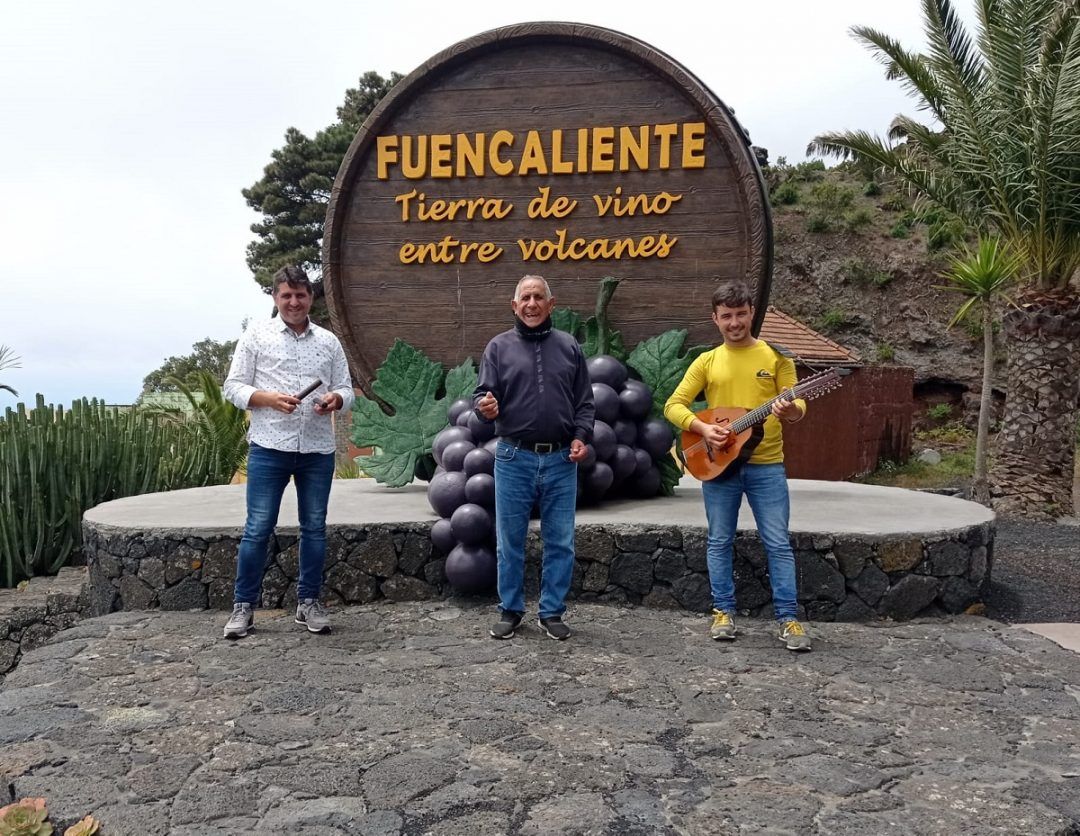
Photo: Domingo Méndez.
To print (offline) and listen
This page is also available as a printable document and as audio.