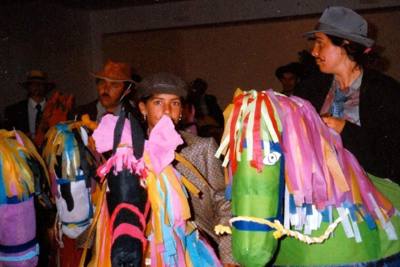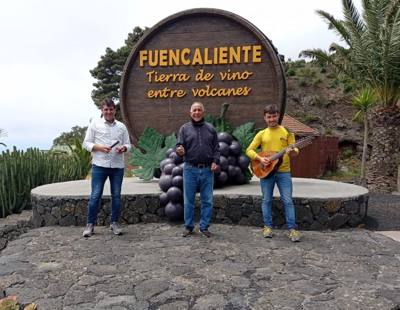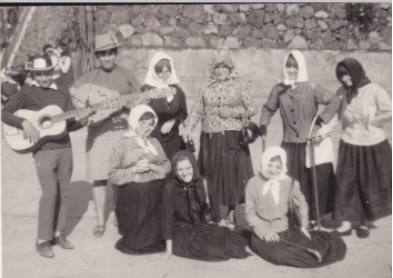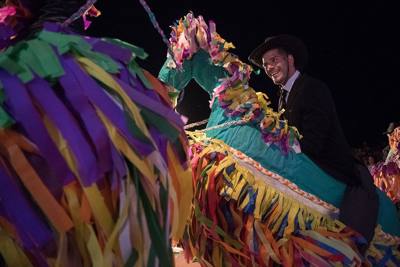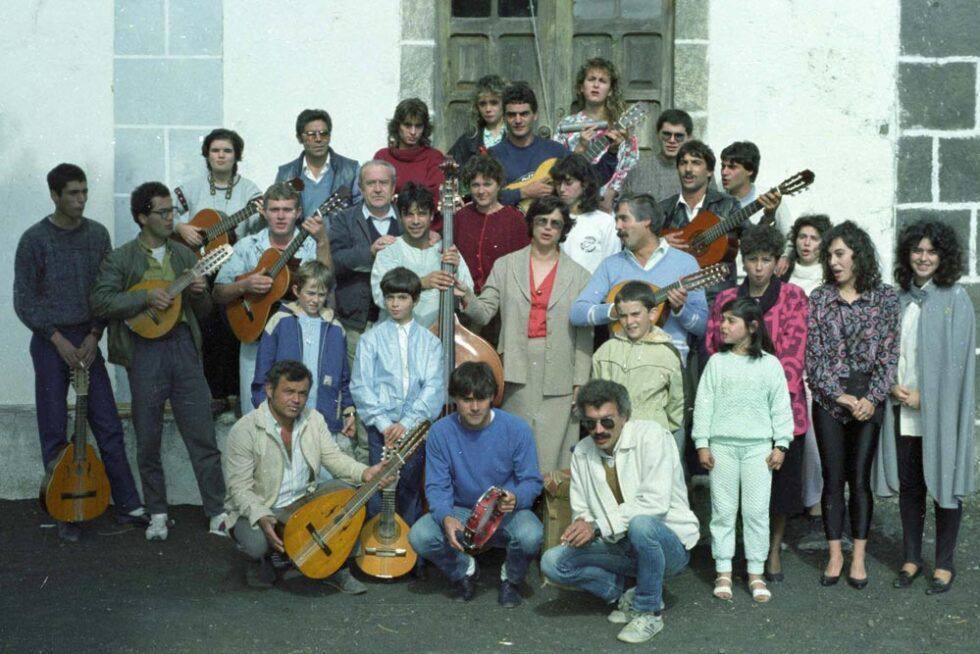
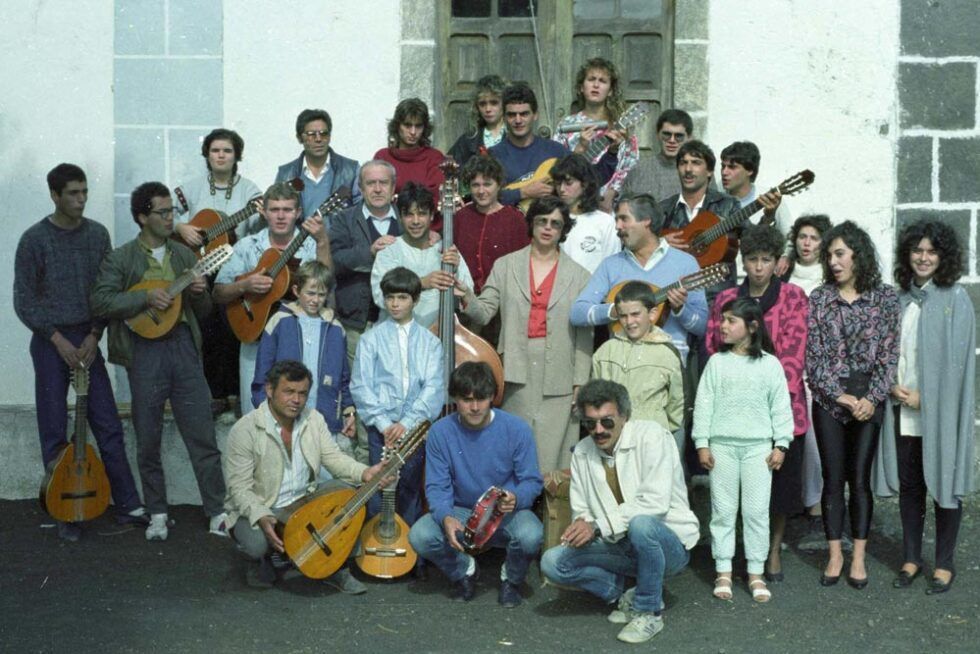
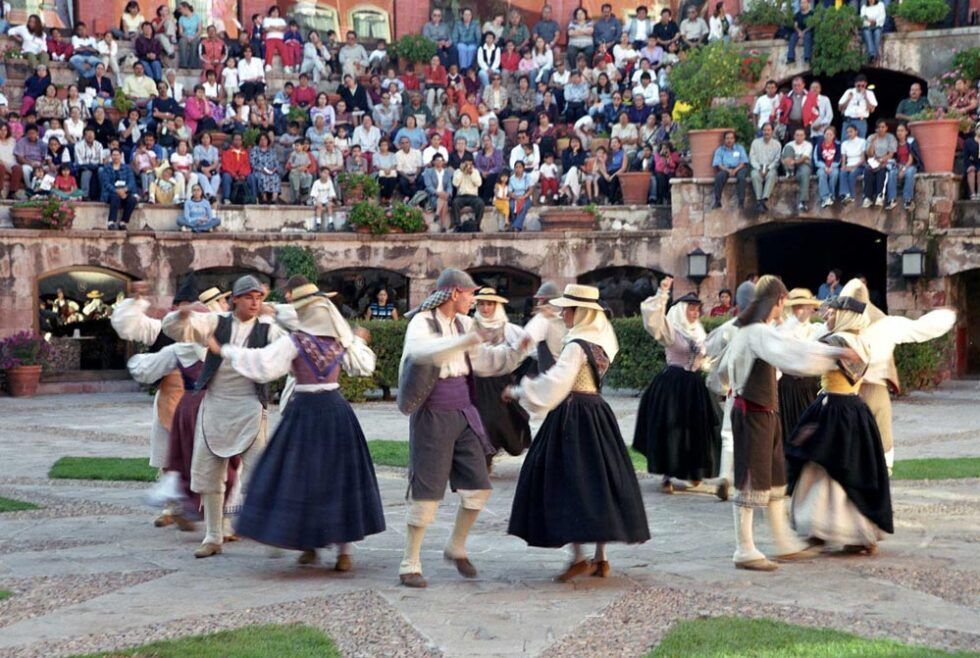
The Cultural and Folk Association “Echentive”, from Fuencaliente de La Palma (Canary Islands), was founded in 1975, making its debut that same year during the festivities of the Bajada de la Virgen de las Nieves. The origins of this group lie in the Rondalla de “Lo Divino”. Echentive set out with a clear goal: the preservation, research and rescue of the Traditional Music and Dances of the Island of La Palma.
The fruit of that work is the publication of nine LPs (“Folclóre Palmero”, six volumes of “Música Tradicional de la Isla de La Palma”, “Villancicos de la Isla de La Palma” and «Isla de La Palma, Cultura Oral»), a book for its thirtieth anniversary and a DVD entitled «Cultivo, transformación y tejido del lino en la Isla de La Palma» (Growing, processing and weaving flax on the Island of La Palma). The concern to faithfully recover not only the dances and traditional music but also the costumes has led Echentive's own members to sow the flax with which they later hand-weave on their looms the shirts, petticoats, skirts and so on that the group wears.
The group has taken part in countless international festivals, touring around a dozen countries across three continents. It has also stood out for its participation in national festivals, as well as in cultural tours and folklore and ethnography events for more than 30 years.
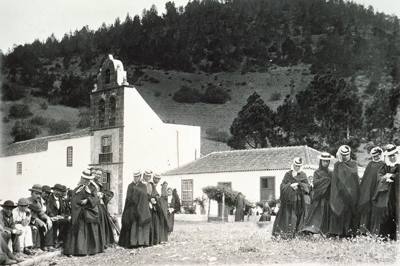
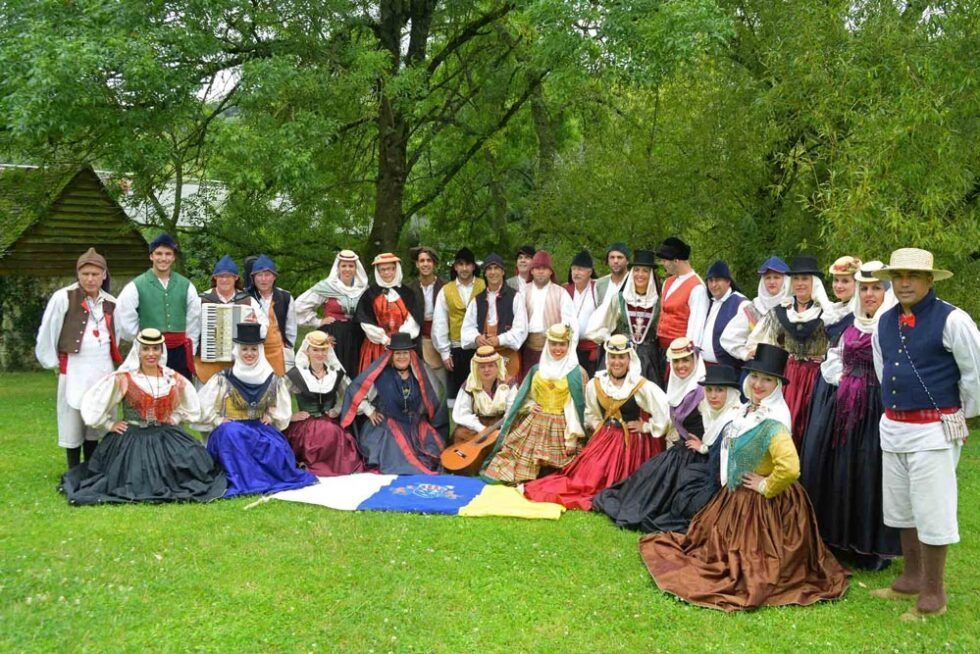
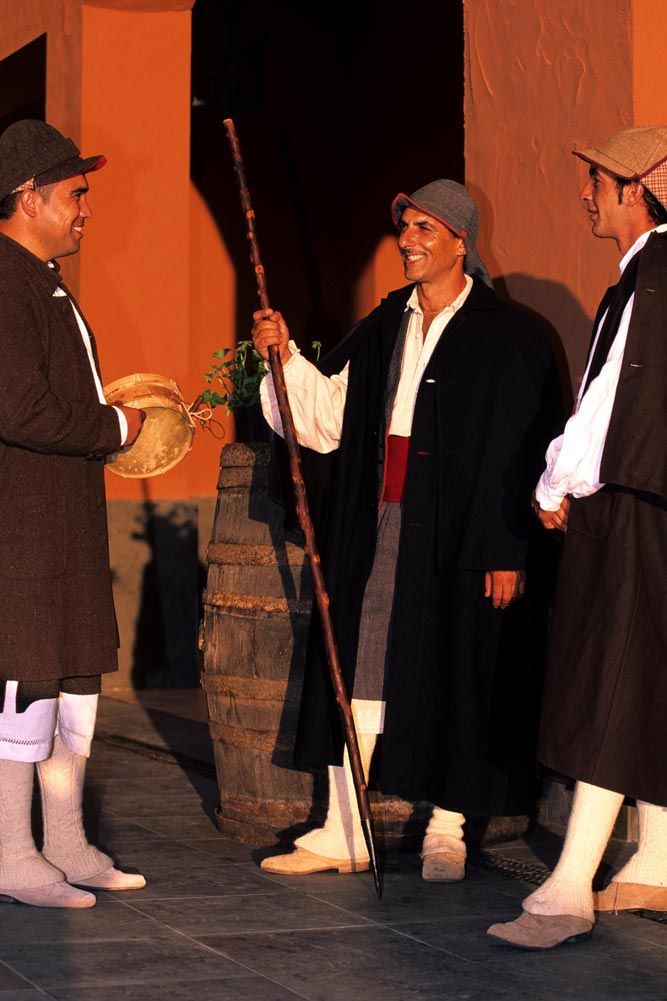
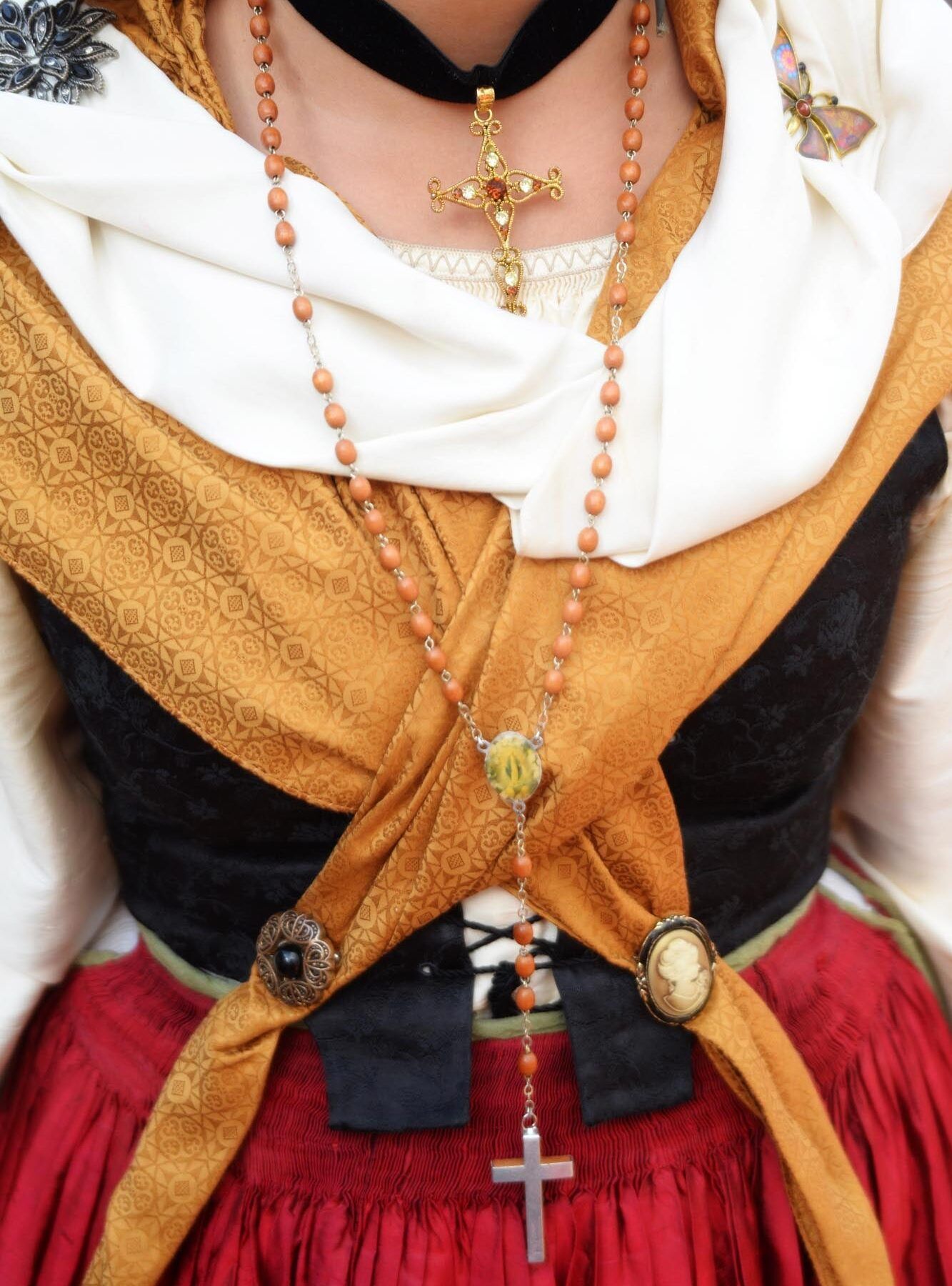
Within the Canary Islands, La Palma is the island that has best preserved its traditional dress. This dress remained in use for several centuries until the end of the 19th century, when it began to decline under the pressure of fashions arriving from abroad. For many years it lay forgotten, until society decided to recover it as the traditional costume. On our island, thanks to the conservative instinct of its people, there are many documentary sources and, more importantly, numerous garments from that period with which the costumes can now be faithfully reproduced.
The textile fibres used to make the costumes were mainly linen, sheep's wool and natural silk, all of them produced on the island. So much so that the entire natural silk process is still alive on our island, the only place in Europe where this ancestral craft survives. We are also fortunate that small hand-loom workshops are still active, where the textile fibres for the costumes are processed. The Echentive group has a workshop on its own premises where the costumes are made, and it can be said that today most of its wardrobe is handmade. A further influence were the engravings made in the middle of the last century by a La Palma painter, Juan Fierro, who depicted the costumes of the period with great fidelity, as well as the fact that the first photographers in the Canary Islands settled in La Palma and produced, in the most isolated areas, reports of great ethnographic value. The quality of the island's costumes and of the materials they were made from is proven by the fact that many families still keep the costumes their grandparents wore during the 19th century.
You can find out more about this historic group from Fuencaliente
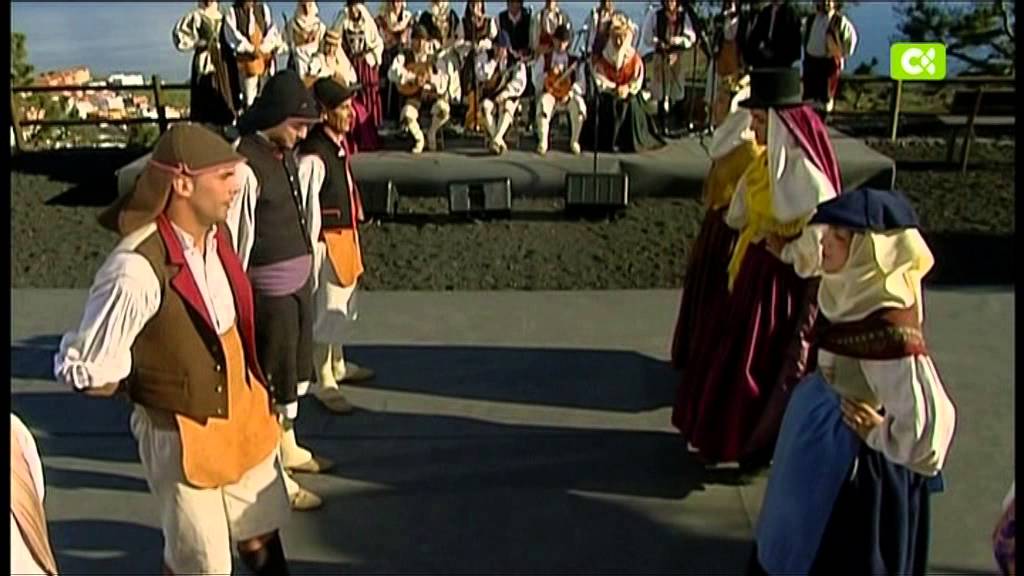
Photo gallery
To print (offline) and listen
This page is also available as a printable document and as audio.